05. November 2026 · 5 min read
30 years of Danish design: Karl Glintborg, chief designer
Karl Glintborg has designed furniture at Thuka Nordwood for around 30 years and helped develop the EU safety standards for children’s beds.
Could you tell us more about the background — how has Danish design earned such high worldwide recognition, and how has Danish design education reached such a remarkable level?
As a Dane, I am proud that Denmark has always had deep respect for traditional cabinetmaking and natural wood. When the furniture industry flourished in Denmark in the 1950s, it proved possible to bring the cabinetmaker’s fine craftsmanship into factory production, and that is what made large-scale export of Danish furniture possible. While design education in many other countries tends to be either purely academic or purely technical, in Denmark the two are equally important. Designers don’t only sketch the furniture (by hand when I trained, on computers today). They are also required to build prototypes in the school’s workshops.
How did you step into the world of design?
When I finished my apprenticeship as a machine woodworker as a young man, I received a bronze medal for my final exam. That caught my boss’s attention, and he decided I should be the one to build our prototypes for trade fairs and clients. The prototypes were designed by external designers, and naturally I spent a lot of time discussing their construction and design with my boss. He realised that I had plenty of good ideas and a creative mind, and over time it was more and more my own designs that clients chose and that went into production.
Is there a design from throughout your career that you’re especially proud of?
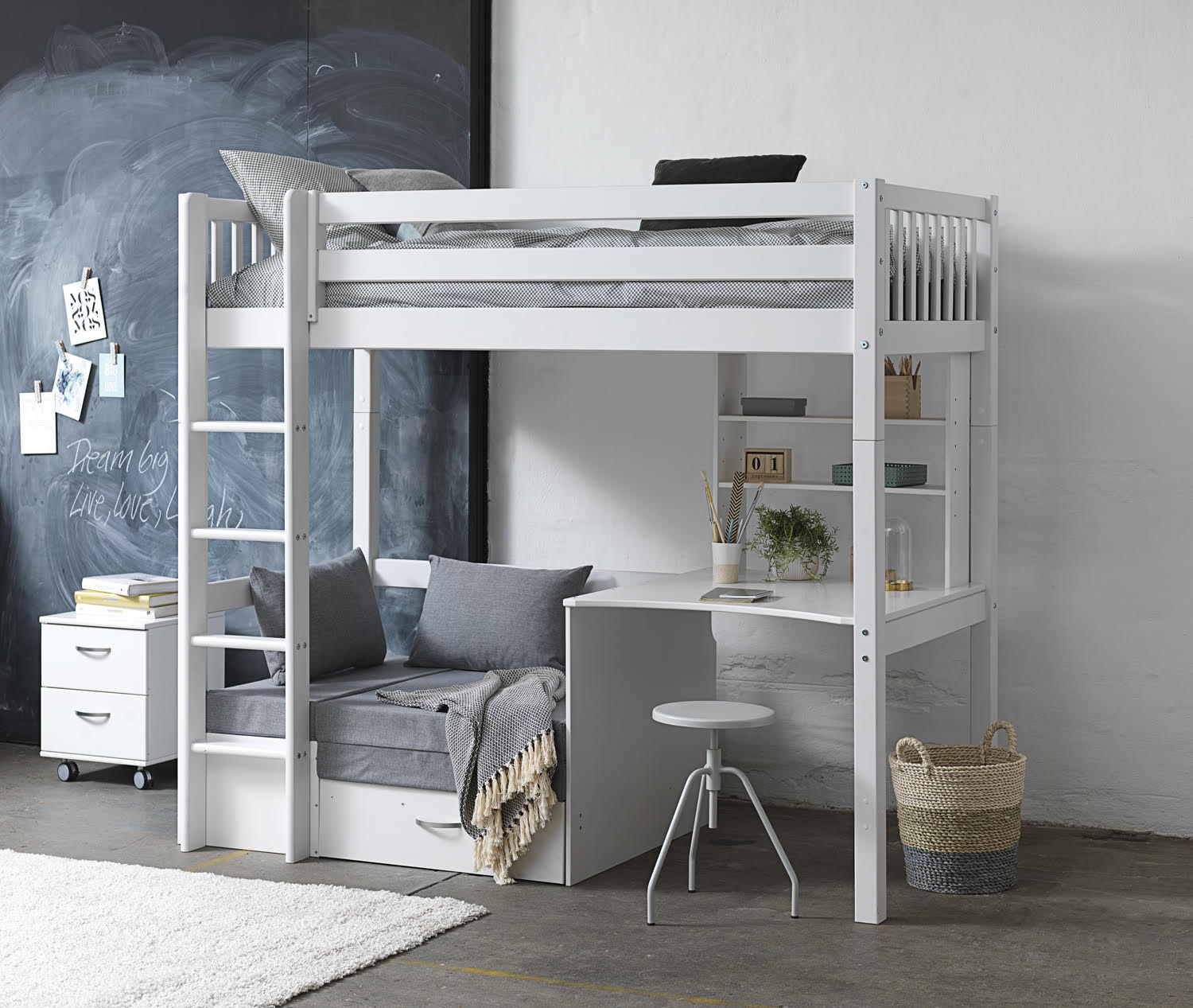
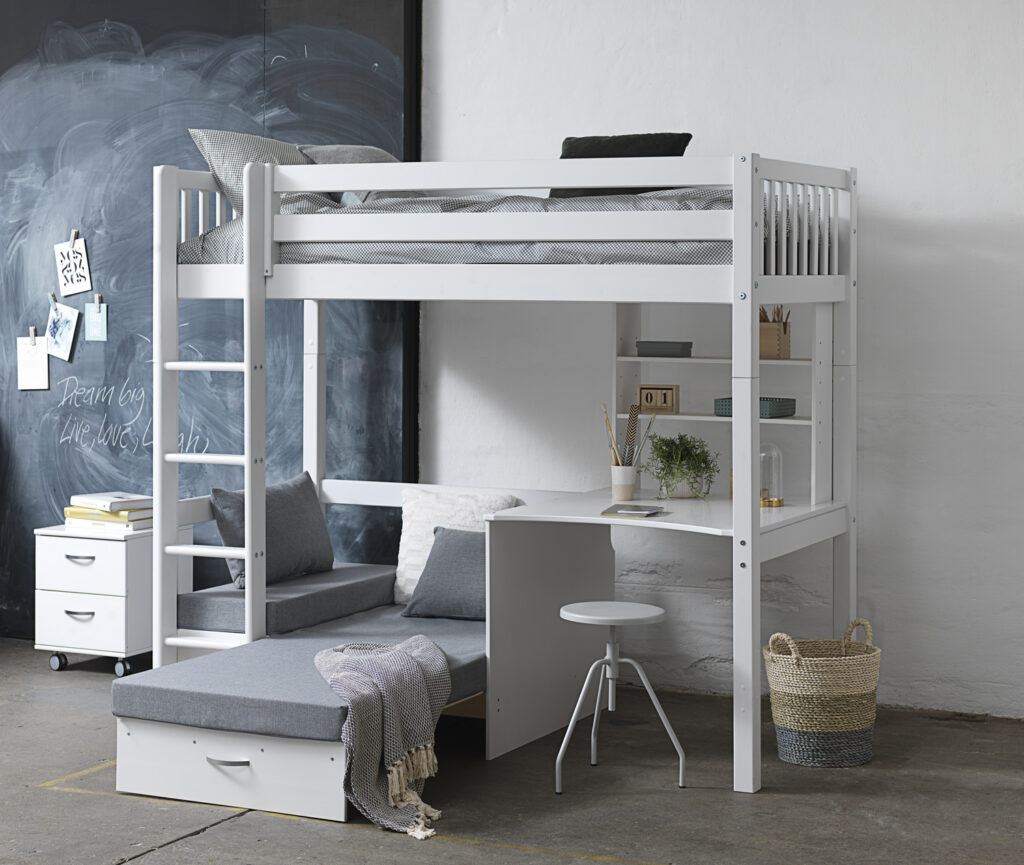
About 25 years ago, I created the Casa combination, a unit designed to fit under a high sleeper. It is especially useful in smaller rooms. It has a desk with shelves and a small sofa that converts into a guest bed when a child has a friend staying over. There is even room for extra bedding in a lidded compartment under the mattress. It is still one of our best-selling bed accessories.
What are the biggest shifts you’ve seen in furniture design over the last 30 years? Have there been changes in B2B client preferences?
In our market segment, I find that design is to some extent driven by price. Products need to be more affordable, which often means thinner materials and simpler construction. Unless a company has a very strong, well-known brand that customers are willing to pay more for, it is difficult today to sell solid furniture with unique design solutions, given the intense price pressure from countries like China and Brazil.
What is your design philosophy, and what do you consider most important in your creative decisions?
When I design products for children, I have three priorities. First, the products must be safe for children to use. Child safety is something I care about deeply, and for 15 to 20 years I have been involved in developing the EU safety standards that children’s beds taller than 60 cm must be tested against. Second, regardless of material thickness or price, the product must be durable and strong, so I never compromise on construction, fittings and so on. Third, the products should be made with as few production runs and as many standard dimensions as possible, so that we can meet the customer’s target price.
My background in production is still very valuable to me. At the same time, I find it very exciting when the budget allows for unique design details or special functional features.
After 30 years, what “tacit knowledge” — things you can’t learn in school, only through experience — do you apply in your work?
Over the years, I have built up extensive knowledge of structural strength, opening dimensions and similar factors across many different constructions. As a result, I have an intuitive sense of what will stay durable for many years and meet the relevant safety standards.
What’s the most important lesson you’ve learned about furniture design over your career?
When it comes to children’s beds and furniture, safety is the most important thing. It outweighs everything else. My background in manufacturing also gives me a deep understanding of production processes and equipment.
Do you factor in preferences of different target markets when designing?
Yes. There are significant differences between our key markets, such as Germany, France and the UK, and also depending on the price point the customer is looking for.
When a private label client brings their own concept, how do you help refine it using your design experience?
First, I make sure the product complies with the relevant safety standards. I often come across issues such as unsafe tread spacing, gaps in bed rails or parts that stick out too far. Those are the first things we correct. Then we develop a design solution that matches the client’s price expectations. We may also adjust some dimensions to fit our standard component sizes.
What trends do you predict shaping furniture design over the next 5–10 years?
With AI tools, anyone can now create a wide range of designs, which may lead to a wider variety of materials being used in a single product. I also expect a shift towards untreated wood and finishes that show the product is made of solid wood rather than particleboard or MDF. That said, colour will remain a major factor well into the future.
What would you want B2B clients to know about Thuka Nordwood’s design capability that they might not already?
We have a long design history covering products for all ages, from babies and children to teenagers and adults. Thuka is not limited to children’s furniture.

Share article